A home can have the finest materials, the most considered floor plan, and a facade that commands attention from the street, and still feel unfinished the moment the landscaping falls short. It is one of the most common oversights in residential construction, and it happens more often with luxury house designs than most homeowners expect. The reason is straightforward: many builders focus entirely on what sits within the four walls and treat the surrounding landscape as an afterthought, something to be handled later with whatever budget remains.
Builders who operate primarily on volume or price-driven models tend to approach landscaping as a line item to minimise rather than a design element to integrate. There is nothing wrong with working to a tighter budget, but the reality is that luxury house designs require a different level of coordination between the built form and the outdoor environment. When the landscape is not considered as part of the overall design from the beginning, the result is a home that looks impressive in isolation but disconnected from the land it sits on. For homeowners investing in a high-end build, that disconnect undermines the very thing the home was designed to achieve.
Why Luxury House Designs Need Landscaping From Day One
In most luxury builds, the landscaping conversation happens too late. The home is designed, approved, and well into construction before anyone gives serious thought to what surrounds it. By that point, decisions about levels, drainage, retaining walls, and outdoor access have already been locked in, leaving limited room for the landscape to do anything more than fill in the gaps.
When landscaping is treated as a design decision from the outset, it becomes an extension of the architecture rather than a separate project layered on top. This means the relationship between indoor and outdoor spaces is planned together, sightlines from key living areas are considered during the design phase, and the materials used outside are selected to complement the finishes used inside. Builders who work on luxury house designs with this level of integration understand that the landscape is not decoration. It is part of the home.
Choosing Materials That Connect Inside and Out
One of the clearest signs of a well-considered luxury home is material continuity between the interior and the landscape. When the stone used on the kitchen benchtop carries through to the outdoor entertaining area, or the timber cladding on the facade is echoed in the fencing and pergola structure, the home reads as a single cohesive design rather than a building surrounded by a separate outdoor project.
The key material decisions that affect how well the landscaping connects to the home include:
- Paving and hardscape materials that complement or match internal flooring
- Retaining wall finishes that align with the home’s external cladding or render
- Timber or steel selections for pergolas, screens, and fencing that reflect the architectural palette
- Plant species and softscape that suit the scale and style of the home without overwhelming the facade
Getting these choices right requires collaboration between the builder, the landscape designer, and in many cases, the architect, ideally before construction begins rather than after the home is handed over.
Outdoor Living That Completes Luxury House Designs
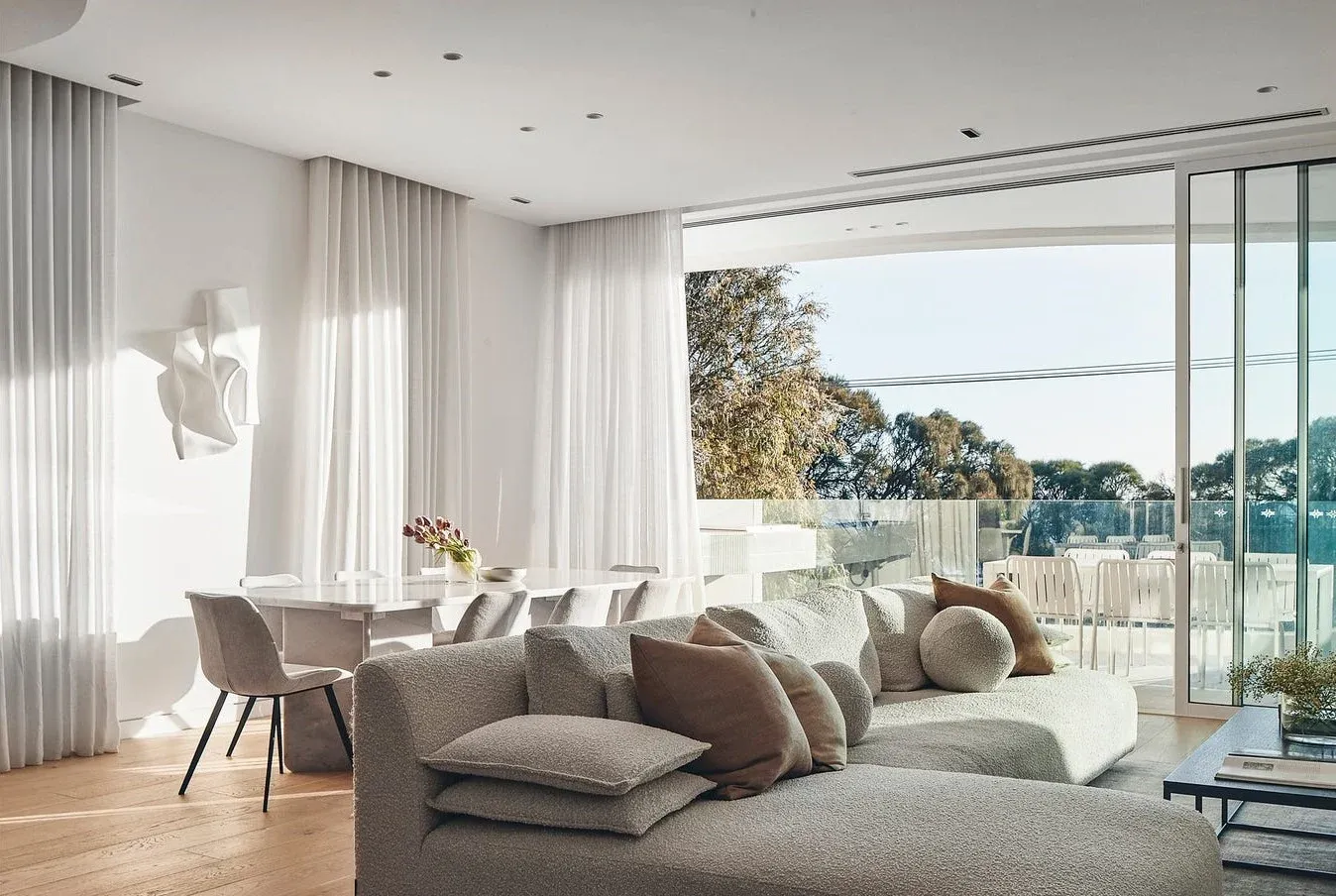
Luxury house designs in Melbourne increasingly prioritise indoor-outdoor connection, with large sliding or stacking doors, level thresholds, and living areas that open directly onto entertaining spaces. The landscaping needs to support and extend that connection rather than interrupt it.
This means outdoor living areas should be designed with the same attention to proportion, level changes, and circulation as the interior of the home. The paving should sit flush with the internal flooring at the threshold. Outdoor kitchens, seating areas, and fire pits should be positioned based on how the home is used, not simply placed wherever space allows. Pool placement, if included, should consider sightlines from the main living areas and the impact on the overall balance of the outdoor space.
When outdoor living is planned alongside the home rather than added separately, the result is a property where the boundaries between inside and outside become almost invisible, which is the defining characteristic of well-executed luxury design.
Driveways, Entries, and First Impressions
The front of the home is the first thing anyone sees, and in luxury house designs, the entry sequence sets the tone for the entire property. A driveway that uses the wrong material, a path that does not align with the front door, or garden beds that feel out of proportion with the facade can diminish the impact of even the most impressive home.
Entry landscaping should be designed to guide movement naturally from the street to the front door while reinforcing the architectural language of the home. This includes the driveway surface, the scale and placement of planting, lighting design, and how the letterbox, gate, and fencing relate to the overall facade. These elements are often treated as minor details, but in a luxury context, they are the difference between a home that feels considered from the moment someone approaches and one that only comes together once through the front door.
Lighting, Levels, and the Details That Elevate
Landscape lighting is one of the most underused tools in residential design, and it has a significant impact on how a luxury home presents after dark. Well-placed lighting can highlight architectural features, define garden beds and pathways, and extend the usability of outdoor living areas well into the evening.
Level changes across a site also play a critical role in how the landscape relates to the home. Retaining walls, stepped gardens, and terraced outdoor areas need to be designed with the same precision as the home’s internal levels to avoid abrupt transitions that feel unresolved. When level changes are handled well, they add depth and interest to the landscape while reinforcing the connection between the home and the site it occupies.
The details that elevate luxury landscaping beyond standard residential work include considered drainage solutions that are integrated rather than visible, irrigation systems designed around the specific planting plan, and boundary treatments that contribute to the overall design rather than simply marking the edge of the property.
Common Landscaping Mistakes in Luxury Home Projects
Even on high-end builds, there are recurring landscaping errors that compromise the finished result and reduce the overall impact of the home. These mistakes are almost always the result of landscaping being treated as a separate project rather than an integrated part of the design.
The most common mistakes include:
- Selecting paving or hardscape materials that clash with the home’s external finishes
- Overplanting garden beds so that mature growth obscures the facade within a few years
- Positioning pools or outdoor structures without considering sightlines from inside the home
- Using standard off-the-shelf fencing or boundary treatments that do not match the quality of the build
- Leaving landscape design until after construction is complete, limiting what can be achieved with the remaining budget and site conditions
Each of these issues is avoidable when the landscape is planned as part of the overall build from the design stage rather than treated as the final task before handover.
Choosing a Builder Who Understands Luxury House Designs Inside and Out
Not every builder considers landscaping as part of their responsibility, and for many volume builders, it sits entirely outside the scope of the contract. For luxury house designs, this approach creates a gap between the quality of the home and the quality of the surrounding landscape that is difficult to close after the fact.
Builders who deliver a fully resolved result understand how to coordinate with landscape designers and architects from the earliest stages of the project. They factor site levels, drainage, outdoor services, and landscape integration into the construction planning rather than leaving it for the homeowner to manage independently after handover. Reviewing a builder’s completed projects with specific attention to how the landscaping sits alongside the architecture is one of the most telling indicators of whether they approach luxury builds as a complete design outcome or simply as a high-end construction job.
FAQs About Luxury Landscaping and Home Design
-
How much should I budget for landscaping on a luxury home?
Landscaping on a luxury build typically represents between 5 and 15 percent of the total project cost, depending on the size of the site, the complexity of the design, and whether features like pools, outdoor kitchens, or extensive retaining work are included. Planning the landscape budget alongside the construction budget from the beginning ensures the outdoor spaces receive the same level of investment as the home itself.
-
When should landscaping be planned during a luxury home build?
Landscaping should be considered during the design phase of the home, not after construction is complete. Early planning allows the builder and landscape designer to coordinate on-site levels, drainage, outdoor services, and material selections so the finished result reads as one unified design.
-
What landscaping styles work best with modern luxury house designs?
Modern luxury homes in Melbourne tend to pair well with clean, structured landscaping that mirrors the architectural language of the home. This includes defined garden beds, architectural planting, natural stone or large format paving, and minimal but considered use of timber, steel, and concrete in outdoor structures.
-
Should my builder manage the landscaping, or should I hire separately?
Working with a builder who coordinates landscaping as part of the overall project ensures better integration between the home and the outdoor spaces. Hiring a landscape contractor separately after handover can work, but it often results in a disconnect between the two if the design was not planned together from the start.
-
Does landscaping add value to a luxury home?
Well-designed landscaping increases both the market value and the street appeal of a luxury home. Properties where the landscape is clearly integrated with the architecture consistently present better and attract stronger interest than homes where the outdoor spaces feel like an afterthought.
A Luxury Home Is Only as Complete as the Ground It Sits On
A home built to the highest standard deserves a landscape that meets it. If the outdoor spaces are not part of the plan from the beginning, the result will always feel incomplete. Ready to build a home where everything connects?