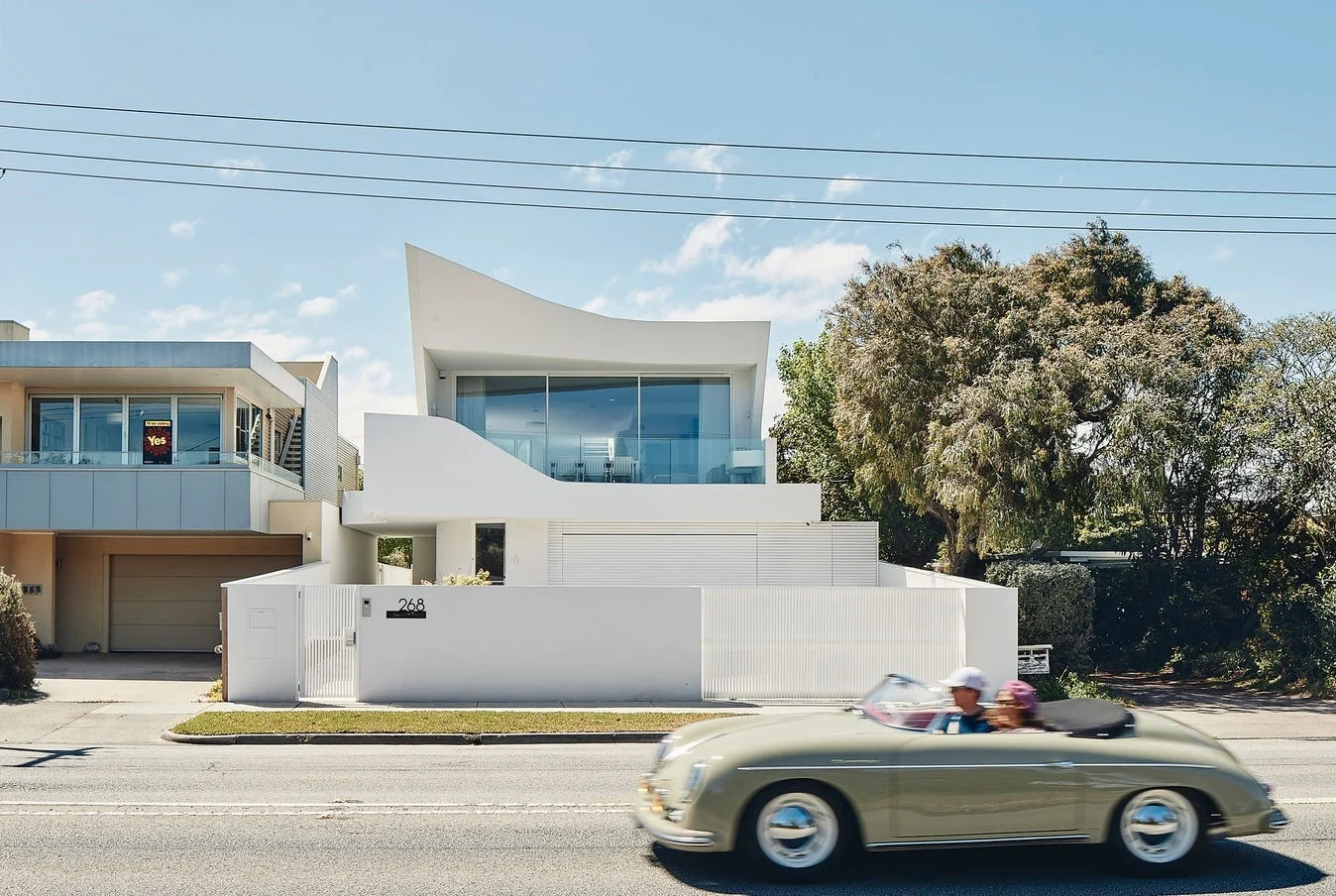
Street appeal is where many custom built modern homes either nail the brief or miss it entirely. The difference between a home that commands attention and one that screams “trying too hard” comes down to restraint, proportion, and understanding what actually works in Melbourne’s established suburbs.
This isn’t about following trends or copying what’s popular on Instagram. It’s about creating a façade that feels confident, considered, and appropriate for its context while expressing genuine architectural character. Get it right and your home elevates the street. Get it wrong and you’ve built something that feels out of place no matter how much you spent.
Planning a custom home build?
Why Street Appeal Actually Matters
Street appeal affects property value in measurable ways. Homes with strong façade design consistently sell faster and command premiums over comparable properties with mediocre presentation. This matters whether you’re building to sell or building to stay, because your home represents a significant capital investment that should appreciate rather than stagnate.
Beyond financial considerations, street appeal affects how you experience your home daily. You see your façade every time you arrive. Your neighbours see it constantly. The street character you contribute to shapes the entire neighbourhood’s amenity and property values.
Modern architecture faces particular challenges with street appeal because contemporary design can read as cold or unwelcoming when poorly executed. The homes that work successfully balance architectural ambition with approachability, creating façades that feel confident without being aggressive.
Material Selection Sets The Foundation
Material choice determines whether your modern home reads as refined or cheap, regardless of what you spent on construction. The quality gap between mid-range and premium materials is immediately visible in façade applications, and this is one area where saving money almost always backfires.
Rendered finishes dominate modern residential architecture in Melbourne, but execution quality varies enormously. A perfectly applied acrylic render over a correctly prepared substrate looks clean and contemporary. The same render poorly applied with visible joints, inconsistent texture, or inadequate preparation looks amateurish within months as hairline cracks emerge.
Texture matters more than colour in rendered finishes. Smooth renders show every imperfection and require perfect substrate preparation. Light textures conceal minor imperfections while maintaining a clean, contemporary appearance. Heavy textures can look dated quickly and collect dirt in Melbourne’s climate.
Colour selection in renders should account for how different tones perform over time. Pure whites show dirt and weathering quickly in urban environments. Off-whites and light greys maintain appearance better while still delivering the clean aesthetic most modern designs target. Darker renders work brilliantly as accent colours but require careful detailing around openings to avoid heat absorption issues.
Cladding materials add depth and interest to modern façades when used thoughtfully. Timber cladding brings warmth that balances the minimalism of rendered surfaces, but species selection and detailing determine whether it ages beautifully or becomes maintenance headaches.
Spotted gum, blackbutt, and similar Australian hardwoods perform well in Melbourne’s climate with proper installation and regular maintenance. They grey naturally over time, which can look distinguished if that’s the intended outcome. If maintaining original colour matters, commit to regular oiling schedules or budget for eventual refinishing.
Engineered timber products like Silvertop Ash or modified timbers offer better stability and longer maintenance intervals than natural timber, though at a premium price. The performance difference justifies the cost for clients who want timber aesthetics without intensive upkeep.
Metal cladding in standing seam or expressed fastener profiles works well on modern homes when detailed properly. Colorbond in Ironstone, Monument, or Woodland Grey integrates successfully into established suburbs without reading as industrial. Avoid bright colours or high-contrast combinations that age poorly as trends shift.
Natural stone and brick provide texture and permanence that render alone cannot match. Even small applications of quality stone around entries or as feature panels elevate the entire façade. Full stone cladding is expensive but practically maintenance-free and ages beautifully.
Brick returns in contemporary architecture when specified and detailed correctly. Face brickwork in consistent tones with minimal mortar joints reads as refined rather than suburban. Recycled or reclaimed brick adds character while maintaining a modern aesthetic when paired with contemporary forms and openings.
The common mistake is mixing too many materials seeking visual interest. Three material types maximum on façades typically create cohesion. More than that usually reads as busy rather than considered.
Proportion and Balance Override Trend
Façade proportions determine whether your custom built modern home feels balanced or awkward regardless of the materials used. This is where architectural skill becomes essential, because proportion is difficult to evaluate from plans and renders until the home is built.
Window sizing and placement affect façade composition more dramatically than most clients anticipate. Large format glazing defines modern architecture, but glass positioned poorly creates a visual imbalance that no amount of material selection can correct.
Floor-to-ceiling glazing works brilliantly when it serves both internal function and external composition. Living areas benefit from expansive glass that connects to outdoor spaces while creating strong horizontal elements on the façade. Bedrooms rarely need full-height glass, and including it purely for external appearance often compromises internal privacy and comfort.
Window alignment between floors creates a visual order that reads subconsciously. Misaligned openings create tension that makes façades feel unconsidered, even when individual elements are high quality. This discipline is where experienced architects add value in façade design.
Horizontal emphasis generally suits the Australian residential context better than vertical emphasis. Wide, low-profile homes with strong horizontal datums feel grounded and appropriate. Tall, narrow forms can work on specific sites but require careful handling to avoid looking squeezed or out of scale.
Entry articulation deserves specific attention because it’s the first element visitors engage with and needs to balance prominence with subtlety. An entry that’s too subtle creates confusion. An entry that’s too prominent feels like an overstatement.
Recessed entries work well on modern homes, creating shadow lines that add depth while providing weather protection. The recess depth matters; shallow recesses under 600mm lose impact, while recesses over 1500mm deep can feel cave-like. The 900-1200mm range typically achieves a good balance.
Entry doors themselves represent a significant visual impact. Solid timber doors in natural finish or dark stains complement most modern colour palettes. Oversized pivot doors make statements appropriate for larger homes on substantial sites. Standard hinged doors work better on more modest homes where proportion matters.
Roof forms and eaves remain contentious in modern residential architecture. Flat roofs create clean profiles that photograph well but require rigorous waterproofing and maintenance. Low-pitch roofs under 5 degrees read as flat while allowing proper drainage and easier waterproofing details.
Eaves on modern homes typically range from zero to 600mm projection. Zero eaves creates strong geometry but exposes walls to weather and sun. Some eave projection protects building fabric and provides shade, improving both appearance and performance over time.
The trend toward zero eaves often creates maintenance issues that clients don’t anticipate. Western and northern façades without eaves weather more aggressively, requiring more frequent repainting or render maintenance. A modest 300-450mm eave protects while maintaining a contemporary appearance.
Landscaping Completes The Picture
Façade design and landscape design are inseparable in creating successful street appeal. The best building design fails without appropriate landscape integration, while thoughtful landscaping elevates even modest architecture.
Front setback treatment determines whether your modern home feels welcoming or hostile. Deep setbacks allow generous planting that softens architecture and creates screening. Minimal setbacks require more careful material selection because the building dominates the street presence.
Hard landscaping in modern homes typically employs simple geometries and limited material palettes. Poured concrete driveways and paths work well when properly finished with either a broom finish for texture or light exposure for visual interest. Pavers in large format create a clean contemporary appearance but require skilled installation to maintain level surfaces and consistent joints.
Natural stone paving in bluestone, granite, or sandstone adds permanence and texture that complements modern materials. Cost is substantially higher than concrete or manufactured pavers, but longevity and appearance justify investment for premium builds.
Planting strategy should balance immediate impact with long-term maturity. Established trees planted at construction create an instant presence but limit species selection to those that transplant successfully at larger sizes. Younger trees establish faster and cost less, but require years to provide meaningful screening and presence.
Screen plants along boundaries should be selected for ultimate mature size rather than initial appearance. Lilly Pillies planted too densely to create instant screening become maintenance problems requiring constant pruning to prevent overgrowth. Proper spacing with interim planting that gets removed as primary plants mature creates better long-term outcomes.
Ornamental grasses in mass plantings provide movement and texture that complements modern architecture’s static forms. Lomandra, Dianella, and Miscanthus varieties offer low maintenance and year-round interest in Melbourne’s climate.
Feature trees should be selected for a scale appropriate to the site. Flowering gums, ornamental pears, or Japanese maples work well on standard residential lots. Larger gums or spotted gums suit bigger sites but overwhelm compact blocks.
Fencing and gates require careful consideration in modern builds because they’re prominent elements that either support or undermine the architectural language. Horizontal timber slats in 75-100mm widths create screening while maintaining a contemporary aesthetic. Vertical slats feel more traditional and should be avoided unless there’s a specific design reason.
Powder-coated aluminium slat systems offer lower maintenance than timber with a similar appearance. Premium systems like Colorbond Slat or similar perform well in coastal or high-exposure areas where timber weathers quickly.
Solid rendered walls with minimal openings provide maximum privacy but can feel imposing on narrow streets. Using rendered wall sections combined with slat sections balances privacy with permeability.
Lighting Creates Night-Time Appeal
Street appeal doesn’t stop at dusk. Exterior lighting reveals architecture after dark and affects both security and ambience. Poor lighting makes even great architecture invisible at night. Excessive lighting creates glare and light pollution that annoys neighbours.
Façade lighting should highlight architectural features rather than flood entire surfaces. Uplighting feature trees creates dramatic shadows and reveals planting structure. Downlighting entries provides functional illumination while creating a welcoming glow.
Linear LED strips integrated into eaves or architectural reveals create an ambient glow that defines building forms without glare. This approach works particularly well on homes with deep eaves or expressed soffits where fittings can be concealed.
Avoid coloured lighting or programmable RGB systems on residential façades. They age quickly as trends change and often read as residential trying to be commercial. Warm white 2700-3000K colour temperature suits most residential applications.
Pathway and driveway lighting serves functional and aesthetic purposes. Bollard lights along paths provide safe navigation while defining landscape edges. In-ground uplights marking driveway edges or garden beds add visual interest without glare.
Solar lights rarely provide adequate performance or aesthetics for quality builds. Hardwired LED systems with proper transformers and controls deliver reliable performance and integrate properly into overall design.
Details That Make The Difference
Street appeal in custom built modern homes ultimately comes down to details executed properly rather than dramatic gestures poorly finished.
Garage door selection matters more than most anticipate because garages often dominate modern façades. Panel-lift doors in Colorbond finishes provide a clean appearance and reliable operation. Sectional overhead doors offer similar aesthetics with a different mechanism.
Timber garage doors create warmth but require maintenance and cost substantially more than metal alternatives. Reserve them for homes where the material palette justifies the investment and commitment.
Door size should be minimised where possible. Standard 2400mm wide single doors suit most vehicles while creating less visual impact than 2700mm or double doors. Wider doors make sense for larger vehicles or workshop use, but dominate façades on narrow lots.
Letterboxes and house numbers represent small elements with disproportionate impact on overall presentation. Integrated letterboxes built into rendered pillars or walls look refined. Surface-mounted boxes should be high-quality metal or timber construction rather than plastic units.
House numbers in stainless steel or brass are mounted directly to the façade with appropriate scale and read cleanly without additional signage. Backlit numbers provide night-time visibility while adding subtle detail.
Services and utilities should be concealed or integrated rather than surface-mounted as afterthoughts. Meter boxes should be specified as recessed rather than surface mount during the design phase. Downpipes should be boxed or concealed within wall cavities where possible.
Air conditioning condensers visible from the street undermine façade quality regardless of other elements. Screen them with landscaping, slat screens, or integrate them into service areas not visible from the primary frontage.
Context and Neighbourhood Character
Modern architecture succeeds or fails based partly on how it responds to the surrounding context. A contemporary home appropriate for South Yarra’s urban environment might feel out of place in established Camberwell streets lined with Victorian homes.
This doesn’t mean defaulting to pastiche or copying neighbouring styles. It means understanding scale, setbacks, material tones, and landscape character that define the street and responding thoughtfully rather than ignoring context entirely.
In heritage overlay areas, council requirements often mandate specific responses to character. Working with these constraints rather than resenting them typically produces better outcomes. Modern insertions in heritage streets can succeed brilliantly when they respect scale and rhythm while expressing contemporary design.
In newer subdivisions or streets with mixed architectural styles, there’s more freedom to pursue bolder contemporary design. Even here, proportion, materials quality, and landscape integration matter more than stylistic choices.
Getting It Right
Street appeal in modern custom homes requires balancing multiple elements: architectural proportion, material quality, landscape integration, and contextual appropriateness. No single element creates success, but any element executed poorly can undermine the entire outcome.
Start with an experienced architectural design that considers façade composition as seriously as internal planning. Many homes prioritise interior spaces and treat façades as surfaces to apply materials to rather than designed compositions requiring thought and skill.
Allocate appropriate budget to materials and finishes that matter. Render quality, window systems, and front landscaping affect daily experience and long-term value more than many internal finishes. Saving money on façade elements rarely makes sense economically.
Work with builders who understand modern detailing and have a portfolio of successfully executed contemporary projects. Modern construction requires different skills and quality standards than traditional building. Not all builders execute it well regardless of experience level.
At Pascon, we’ve completed dozens of modern custom homes across Melbourne’s premium suburbs, navigating heritage overlays, tight urban sites, and established neighbourhood contexts while delivering architecture that enhances street character rather than compromising it.
If you’re planning a modern custom build and want to discuss how to achieve a strong street appeal appropriate for your site and suburb, talk to our team. We can provide specific guidance based on your location, budget, and design aspirations.
Start your project with Pascon
Share your site details, priorities and budget range. We’ll outline the right next steps, realistic costs and a clear timeline.